This post contains affiliate links. If you purchase through these links, I may earn a small commission at no extra cost to you.
Welcome to Pachmarhi – The Queen of Satpura
With summers getting harsher every year, escaping into the mountains has almost become a ritual for city dwellers. While places like Manali and Ooty are often the obvious choices, I wanted something quieter, less crowded… something untouched.
That’s when I found Pachmarhi.
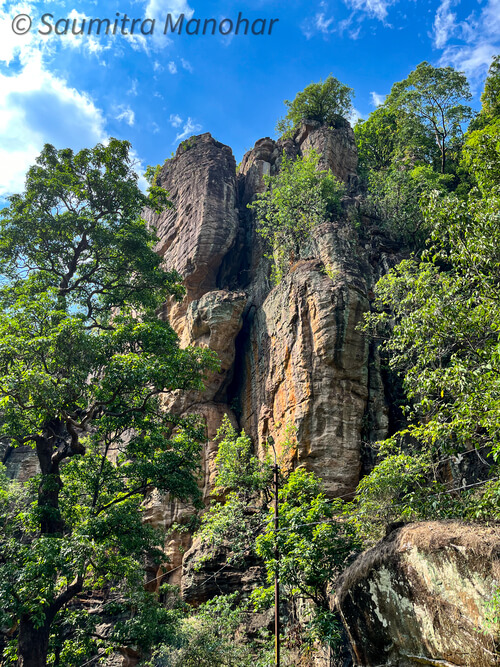
Tucked away in the Satpura ranges of Madhya Pradesh, Pachmarhi isn’t just another hill station – instead, it is a place where nature feels raw, ancient, and deeply calming. Often called the “Queen of Satpura,” this small town sits at around 3,500 feet above sea level and is part of a UNESCO Biosphere Reserve.
However, what truly sets Pachmarhi apart isn’t just its greenery — rather, it is the mystical aura of the place.
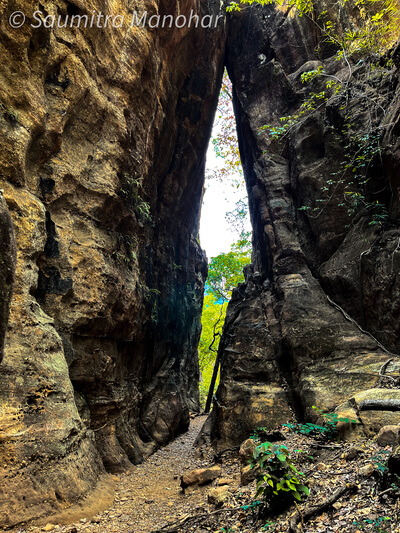
Towering cliffs carved by time, narrow gorges that seem to whisper stories, caves that feel sacred even before you know their history… Pachmarhi doesn’t just offer views — it offers an experience.
And if you’re planning a Pachmarhi trip from Mumbai, here’s your Pachmarhi travel guide from Mumbai.
Pachmarhi Quick Travel Summary
- 📍 Location: Madhya Pradesh
- ⛰️ Best for: Nature, caves, waterfalls
- 📅 Ideal duration: 3-4 days
- 💸 Budget: ₹8,000 – ₹18,000 per person
- 🚆 Nearest station: Pipariya
- ✈️ Nearest Airport: Raja Bhoj Airport, Bhopal
- 🌄 Top attractions: Dhoopgarh sunset, Jatashankar cave

How to Reach Pachmarhi from Mumbai
Reaching Pachmarhi isn’t as straightforward as some popular hill stations — but that’s also what keeps it less crowded and more pristine.
By Train – The Most Practical Option
The nearest railway station to Pachmarhi is Pipariya, and several trains connect it directly to Mumbai.
We boarded the LTT–Gorakhpur Kashi Express from Kalyan, and the journey took around 14 hours — fairly comfortable if you plan it well.
From Pipariya, Pachmarhi is about an hour away. Taxis are easily available right outside the station, typically costing between ₹1000 to ₹1200.
If you’re looking for the most balanced option in terms of cost and convenience, this is it.
By Air – The Fastest Route
If time is a constraint, you can fly from Mumbai to Bhopal (Raja Bhoj Airport), which takes roughly 1 hour 20 minutes.
From Bhopal, Pachmarhi is a scenic 4–5 hour drive. Taxis cost anywhere between ₹4500 and ₹6000.
Buses also operate on this route, but they run in limited numbers and require careful planning—honestly, they’re not worth the hassle unless you’re travelling on a tight budget.
By Road – For the Hardcore Road-Trippers
Driving from Mumbai to Pachmarhi is a long haul — over 1000 km.
While the Samruddhi Expressway makes a part of the journey smoother, it still requires a halt (Aurangabad is ideal). The route via Vardha is longer but surprisingly faster overall.
That said, unless you genuinely enjoy long drives, this isn’t the most practical option.
Where to Stay in Pachmarhi
One of the things I loved about Pachmarhi is that it caters to all kinds of travellers without losing its charm.
You’ll find:
- Budget hotels (near market)
- Mid-range resorts
- Premium cottages with scenic views
Pro Tip: Stay slightly away from the market for better peace and views.
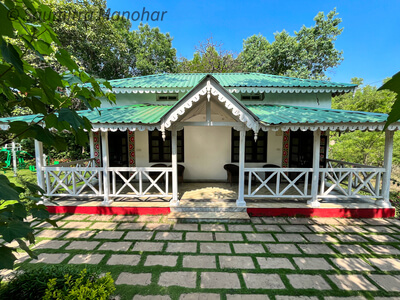
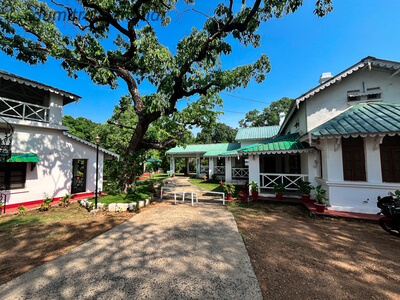
We chose a small resort about a kilometre away from the main market — and that made all the difference.
It had just 8 cottage-style rooms, an old-world colonial charm, and something that’s hard to put a price on — absolute peace. You can check out the details of the hotel here.
Waking up to silence, with nothing but the sound of rustling leaves… that alone made the stay worth it.
Exploring Pachmarhi – What You Should Know First
Before diving into the itinerary, there’s one important thing to understand.
Pachmarhi is a protected forest region, and tourism here is regulated.
Broadly, sightseeing is divided into:
- Open areas – Accessible by private vehicle
- Forest reserve areas – Accessible only via authorized Gypsy vehicles
This might feel restrictive at first, but it actually helps preserve the beauty of the place.
To visit the spots that are in the reserved forest area, you need to visit the Forest Department office in the premises of the Bison Lodge, and pay INR 2000 for the Gypsy with a Guide and another INR 1210 for the tourist permit. The authorities number all Gypsy cars, so you can easily locate your vehicle among hundreds of others at any tourist spot.
Day 1 – Temples, Valleys & First Impressions
We started our journey by exploring places that fall outside the forest reserve.
Gupt Mahadeo & Bada Mahadeo – Faith Inside the Mountains
In Hindu culture, devotees also know Lord Shiva as Mahadeo, meaning the God of Gods. Pachmarhi owes its significance partially to the places of worship dedicated to lord Shiva, whom the locals worship a lot. There are four such temples in Pachmarhi – Gupt Mahadeo, Bada Mahadeo, Chouragarh and Jatashankar. Several other temples in Pachmarhi are dedicated to different deities as well. However, these four temples dedicated to Lord Shiva are one of the most visited places in Pachmarhi.
Pachmarhi has a strong spiritual undercurrent, and it becomes evident the moment you visit Gupt Mahadeo.
The cave is incredibly narrow — so narrow, in fact, that only one person can pass through at a time. Moreover, the interior can accommodate barely six to seven people, which gives it an intimate, almost secretive feel.
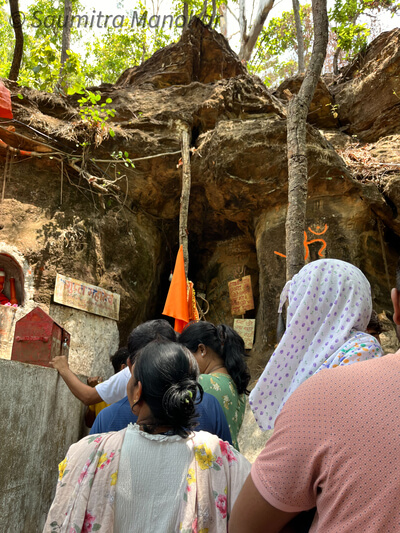
A short walk away is Bada Mahadeo, a much larger cave temple. The cool air, the sound of water dripping from the rocks, and the dim lighting create an atmosphere that feels surreal.
A short descend from the Bada Mahadeo and a couple of stairs thereafter, will take you to the other cave that houses a small idol (most probably made of clay) of Goddess Parvati. Nothing much to do there except seeking the blessings of her holiness.
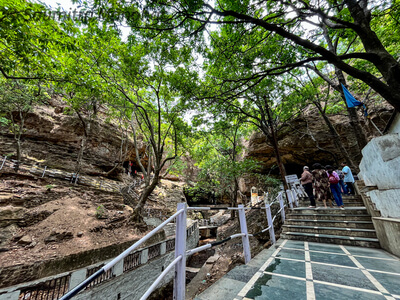
We decided to give Chouragarh a pass this time, since it entailed a kilometer trail till the base and then an ascend of around 1365 steps to reach the temple. Our guide and driver for the day, suggested we spare one whole day for Chouragarh since it can be pretty exhausting.
Priyadarshini (Echo Point) – Where the Valley Talks Back
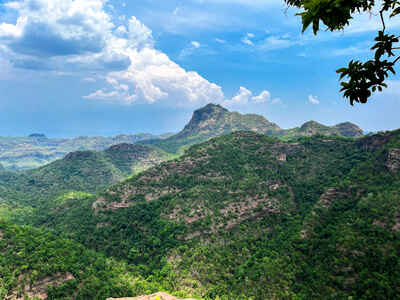
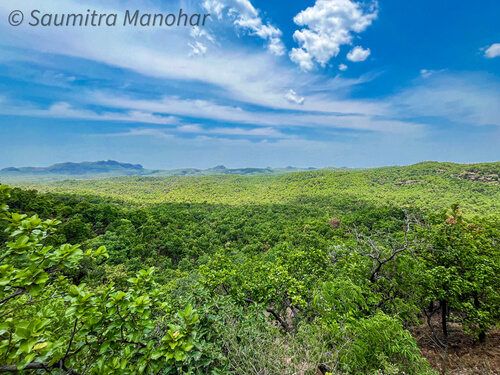
Like most hill stations, Pachmarhi has its own Echo Point — but what makes this one special is the view.
Endless stretches of green valleys unfold in front of you, and somewhere in the distance, you can spot Chouragarh, perched high like a silent guardian.
There’s something oddly calming about standing there, letting your voice echo into the vastness.
Jatashankar – The Soul of Pachmarhi
If there’s one place that truly defines Pachmarhi, it’s this. This is the fourth and the most beautiful shrine of lord Shiva in Pachmarhi.
Reaching Jatashankar involves a short trek through narrow gorges flanked by towering rock walls. And as you descend deeper, the temperature drops, the noise fades… and everything slows down.
The cave itself sits inside a ravine, surrounded by massive boulders. Natural formations inside are worshipped as Shiva Lingams, and legend has it that Lord Shiva once hid here in order to save himself from the wrath of Bhasmasura, who had turned against Shiva after being blessed by Shiva himself.
Whether you believe the story or not, the energy of the place is ethereal!
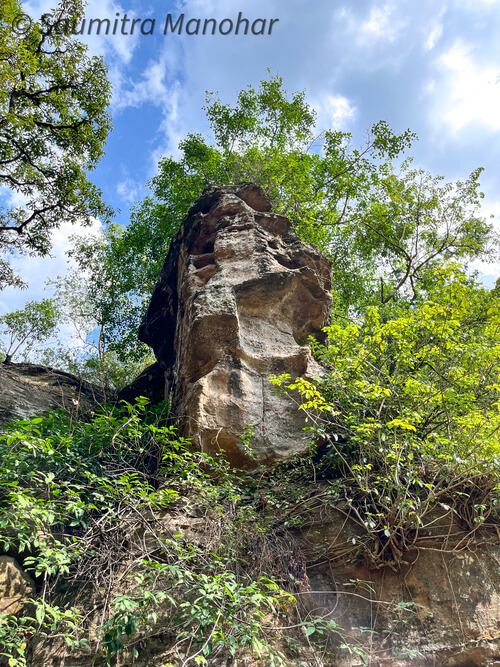
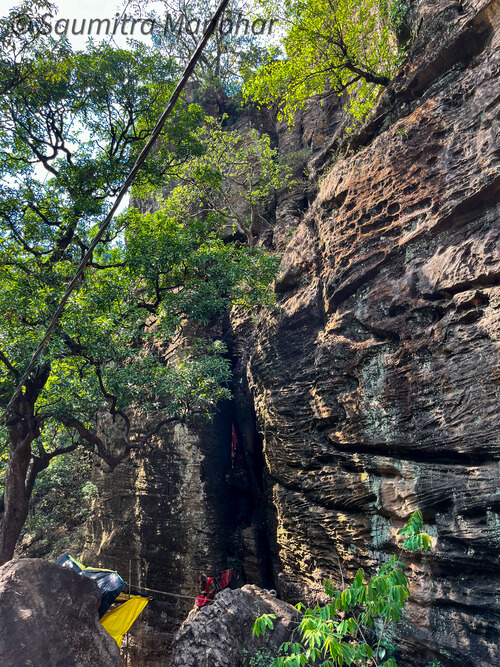
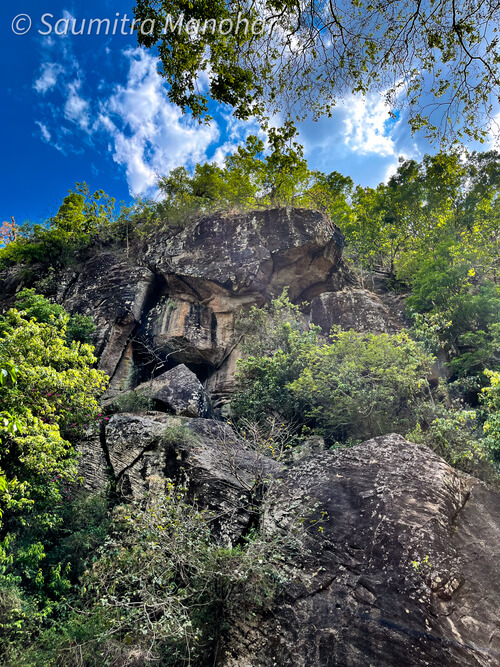
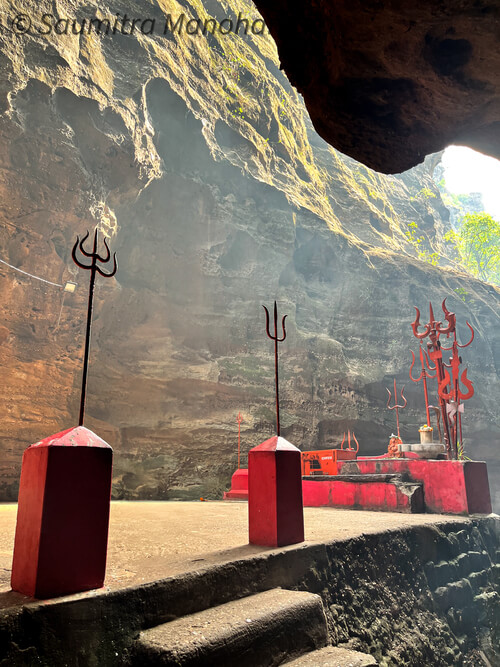
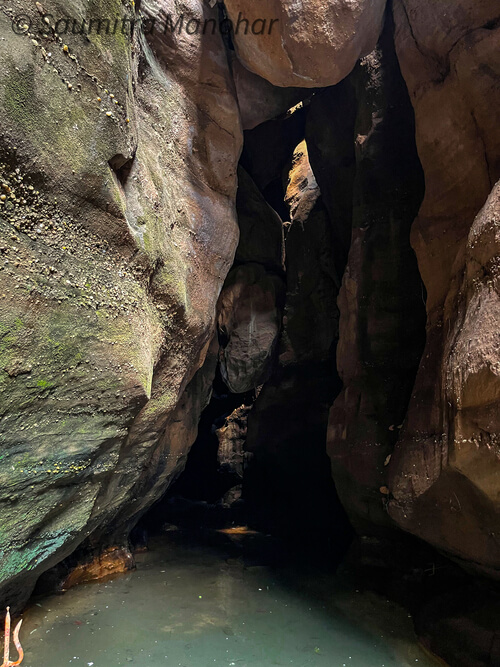
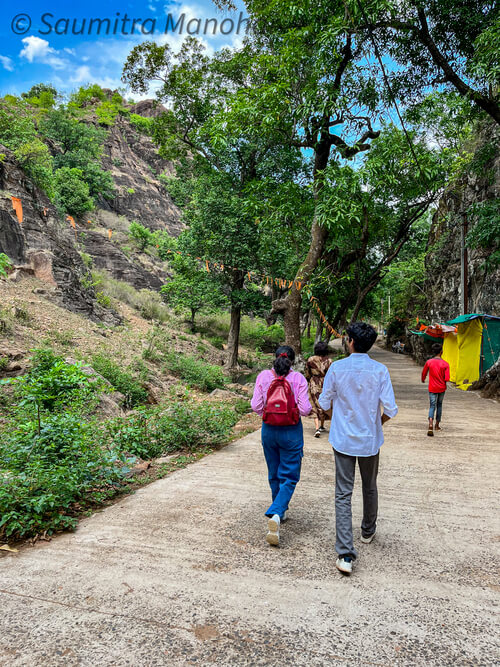
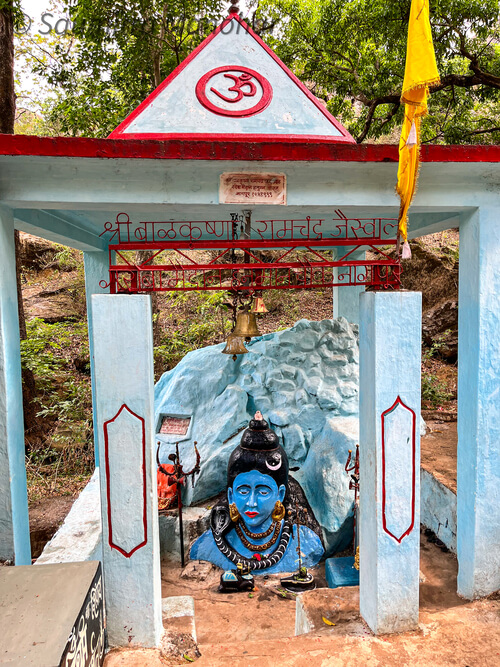
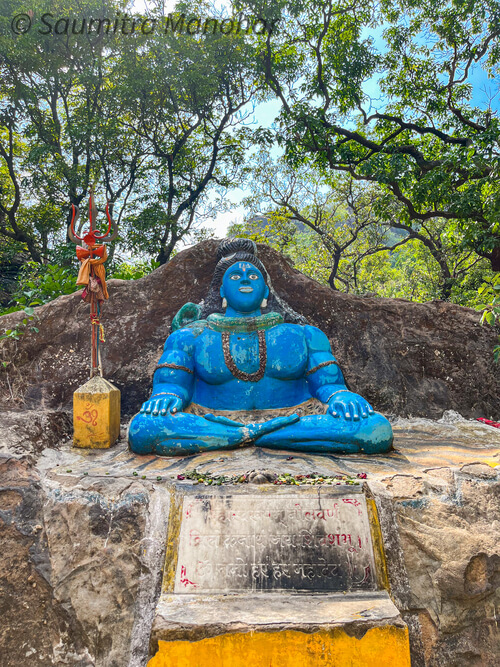
To reach the caves, you have to park your vehicle around 1.5 kms away from the caves in the parking area. From the parking, you need to trek till the caves. Along the way you will also come across lord Hanuman temple and a few idols of lord Shiva.
Evening at Boat Club & Rajendragiri Sunset Point
We kept the evening light.
The Boat Club Lake is a nice place to unwind — nothing extraordinary, but peaceful enough for a relaxed stroll or a short boat ride. Its located at approx. 3 kms from the main bus stand, near to Bison Lodge Museum.
You can enjoy boat rides, either in pedal boats or speed boats. There are a few other activities too that you can go for, like zip-lining and ATV rides. Apart from that and a few other restaurants at the lake-side, there is nothing much to do at this place.
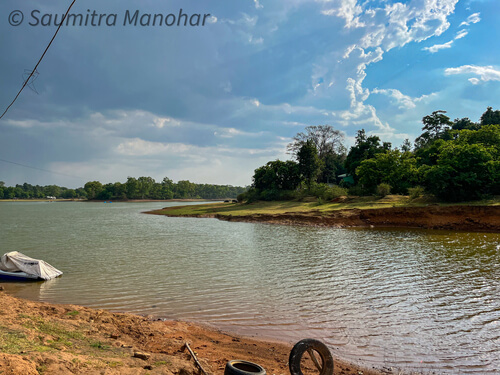
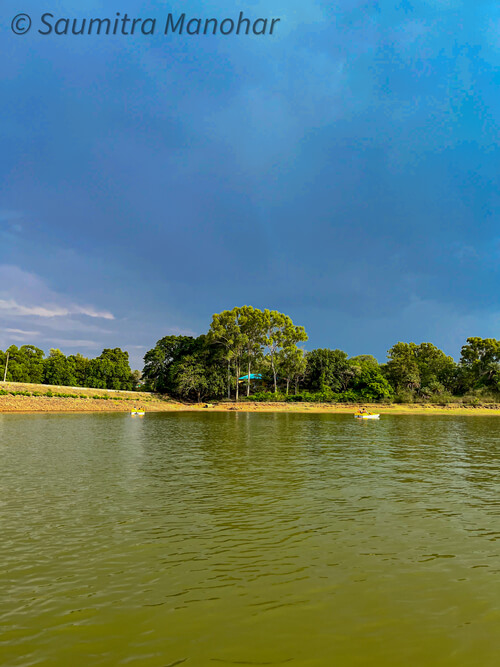
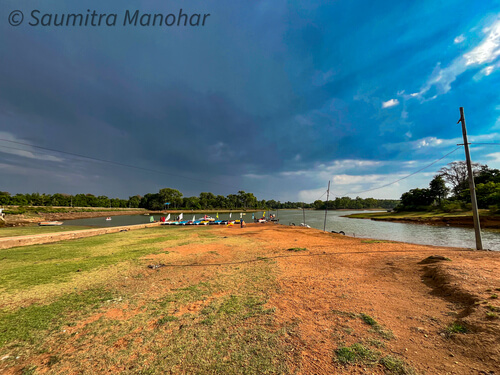
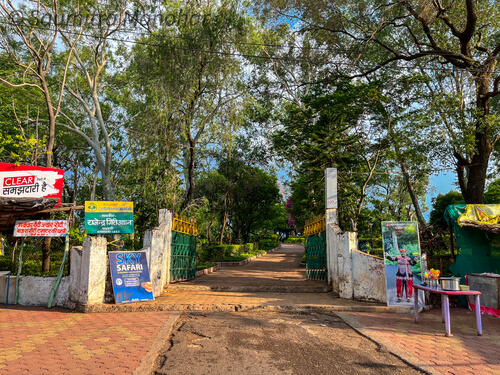
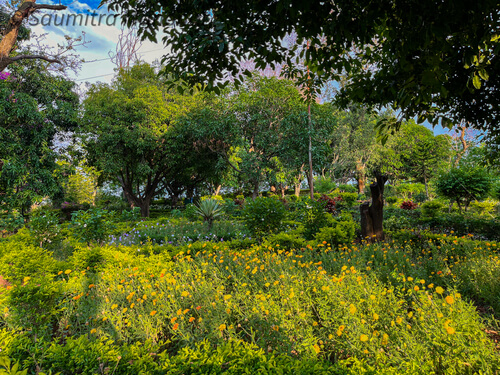
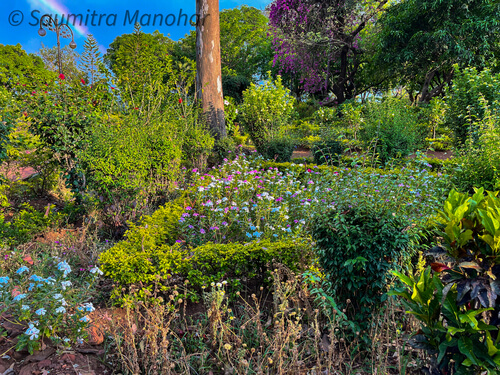
Later, we headed to Rajendragiri Sunset Point, that has a sprawling flower garden lush with spectacular flora and has been named after the first President of India, Dr. Rajendra Prasad. It also has a tree planted by Dr. Rajendra Prasad himself.
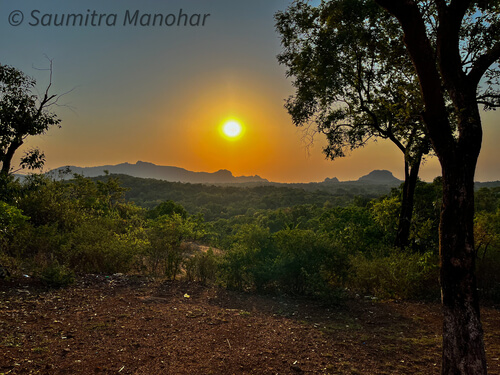
We didn’t stay till sunset (we were exhausted), but even the pre-sunset glow over the valley was beautiful enough to pause and take it in.
Day 2 – Slow Travel & Local Flavours
Local Bus Stand and The Market
We deliberately kept Day 2 easy.
Sometimes, the best way to experience a place is to not rush through it.
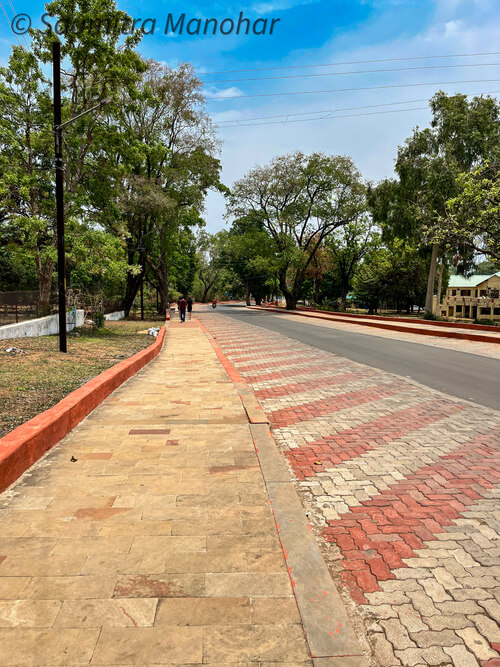
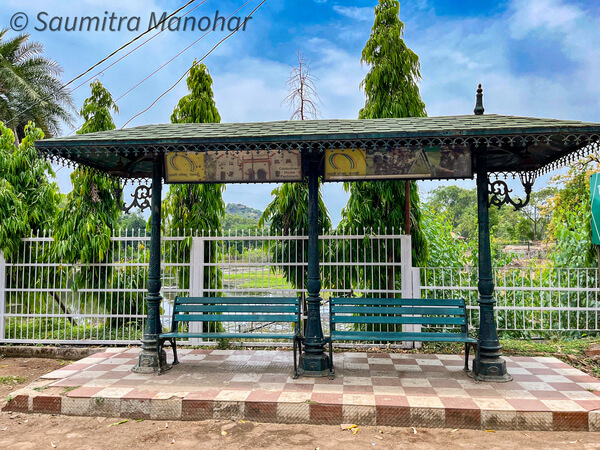
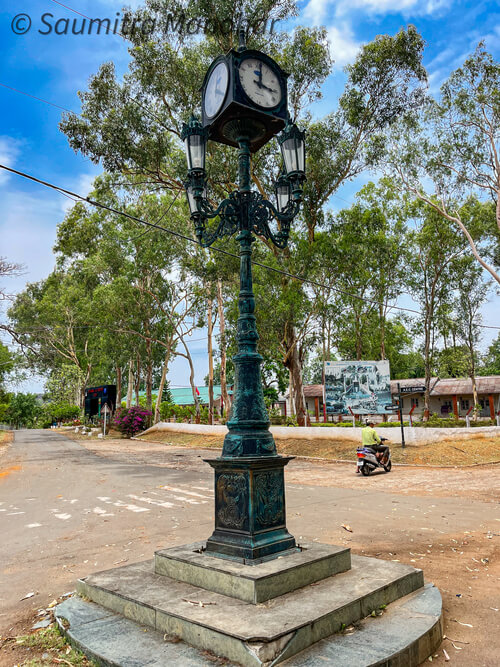
A slow walk towards the local market near the bus stand turned out to be surprisingly enjoyable. Quiet streets, a gentle breeze, and that small-town stillness you rarely find anymore.
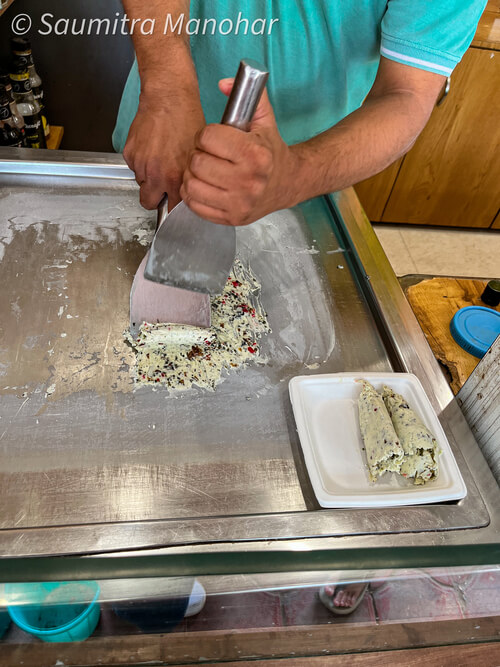
We tried something fun here — Tawa Ice Cream, rolled on an ice-cold surface. Simple, quirky, and oddly satisfying! For those interested, you can check out the recipe for Tawa Ice-cream here.
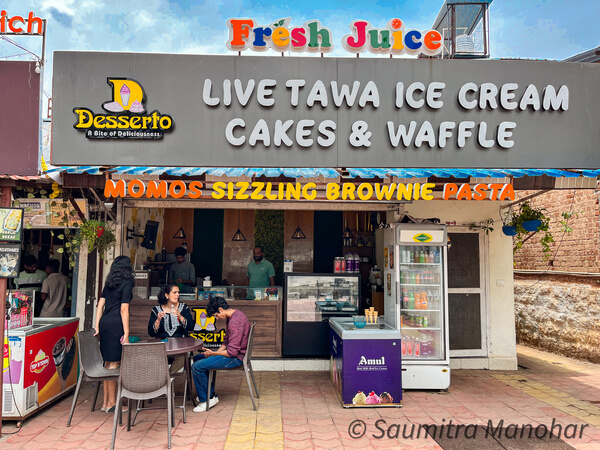
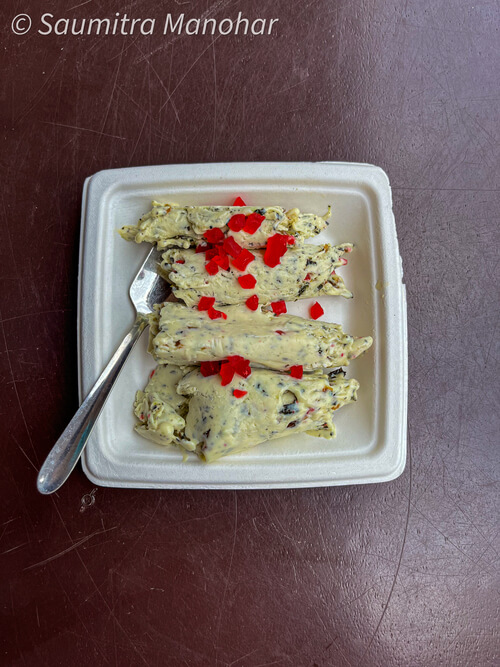
Shops and restaurants line the local market, with a small section dedicated to street food known as Chowpatty!
Pachmarhi Catholic Church
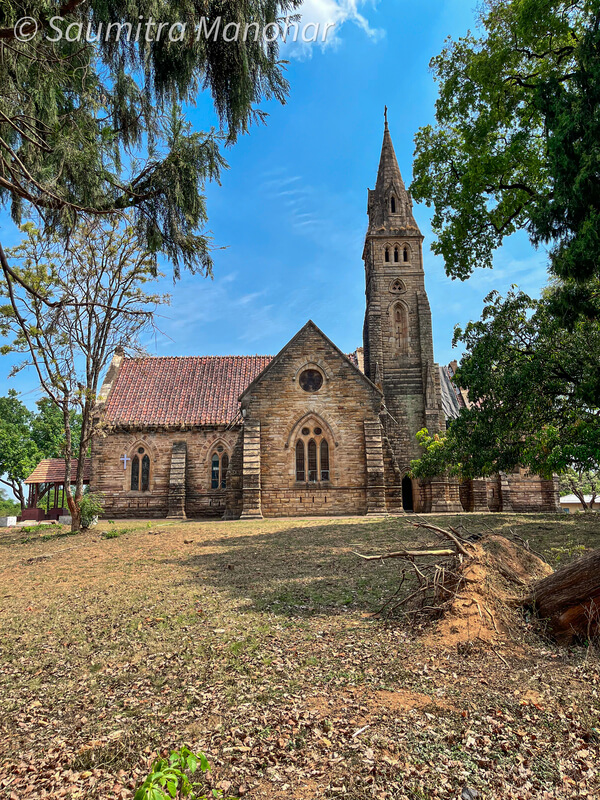
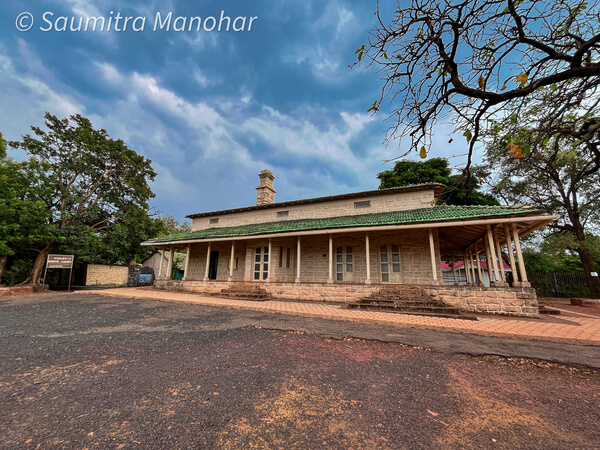
The Pachmarhi Catholic Church, also called as Protestant Church of Pachmarhi, was built by the British around 1875 and is a beautiful blend of Irish, French and British architectures. I had heard a lot about the beautiful interiors, decorated with tainted glasses above the altar that were imported from Belgium. However, the church opens only on Sundays for mass. And since our day 2 was a Wednesday, we missed the opportunity to witness an artistic beauty!
Pancharanya (Hatt Bazaar) – A Lively Evening
By evening, we headed to Pancharanya, a cultural park that comes alive with music, food, and small activities. The entry fee to the park is INR 50 per person
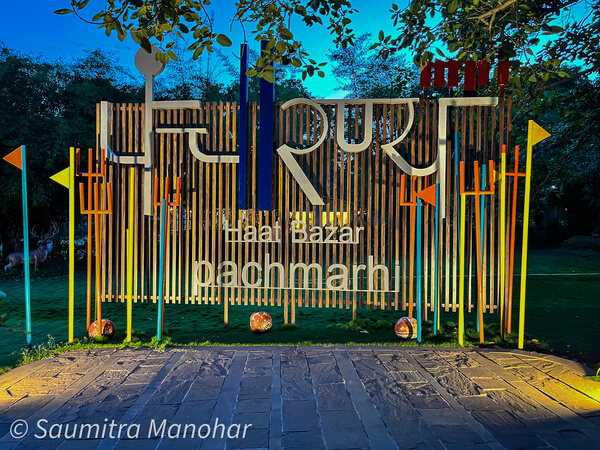
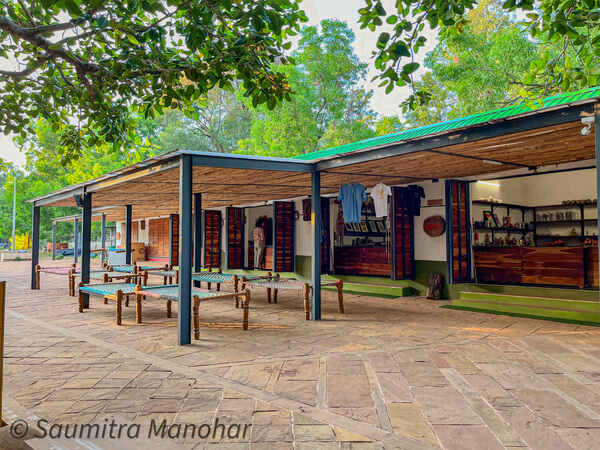
The highlight here is the laser show, which gives you a glimpse into Pachmarhi’s history and biodiversity. The entry fee to the show is around INR 150 per person.
Also — a small but important mention — the food at The Banyan Roots cafe inside (especially the fries and sandwiches) was unexpectedly good.
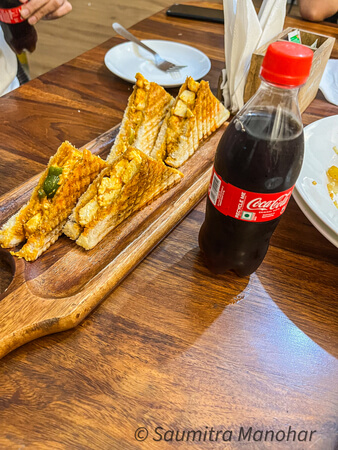
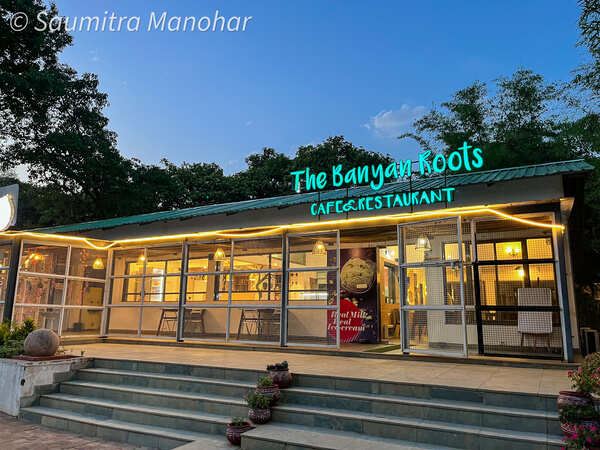
You can also try your hands on some batting practice inside the nets and some archery as well.
Day 3 – Into the Forest
This was the most exciting part of the trip.
To explore the forest reserve, you need to book a Gypsy from the Bison Lodge Museum.
Tip: if you’re a small group, try sharing the vehicle with others to split costs.
Bison Lodge Museum
This museum was built in 1862 by Captain James Forsyth, who came to Pachmarhi while leading his troops to Jhansi in 1857 and then settled down here. In fact, he is also credited for discovering Pachmarhi as a hill station. The lodge was his residence then and is now converted into a museum.
The museum gives you a glimpse of the rich bio-diversity of Pachmarhi in the form of pictures spread across the rooms, alongside life-size stuffed animals like Tigers, Lions, Bison and Crocodiles. There is also an open-air theatre in the premises that plays documentaries and presentations on wildlife in Pachmarhi.
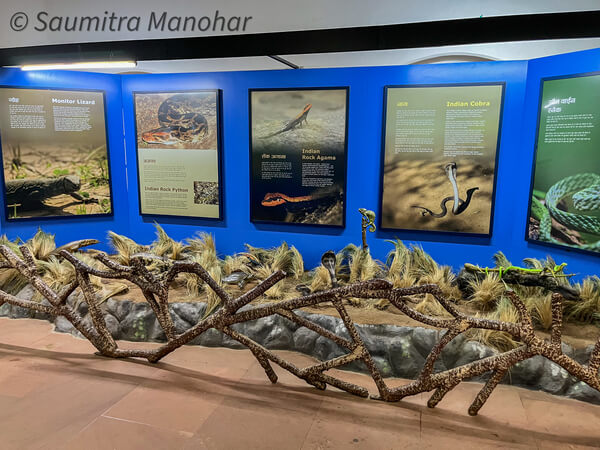
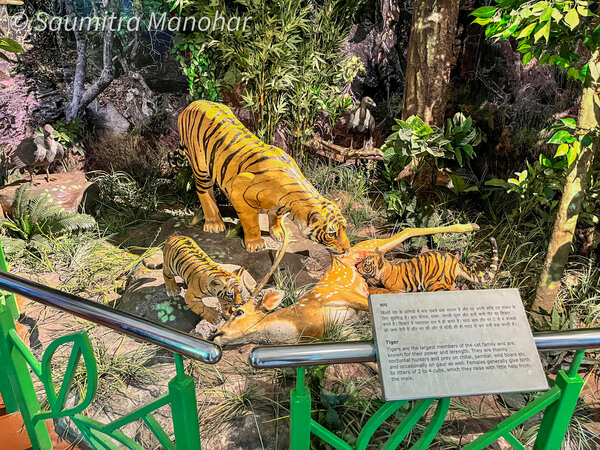
Pandav Caves – Myth Meets History
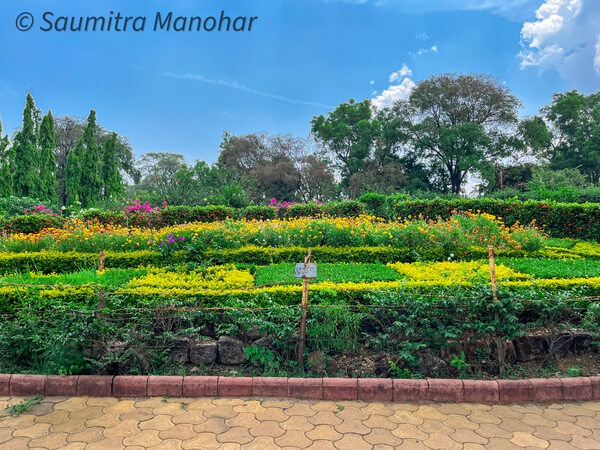
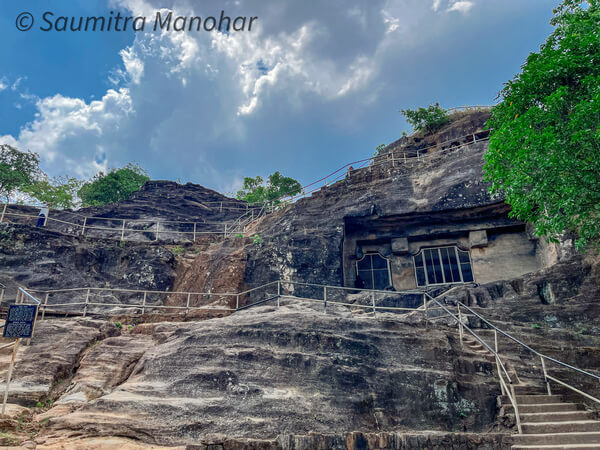
Pandav Caves also known as Shri Panch Pandav Caves are located at around 1.5 kms from the Bison Lodge. These ancient caves, carved out of a single rock, are believed to be associated with the Pandavas, though some historians suggest they were Buddhist shelters.
Pachmarhi also derives its name from these caves. In the local language Pach stands for five and Marhi stands for cave, which means five caves.
Either way, the structure is fascinating — and the garden around it makes it one of the most picturesque spots in Pachmarhi.
Bee Falls – Beauty with a Bit of Effort
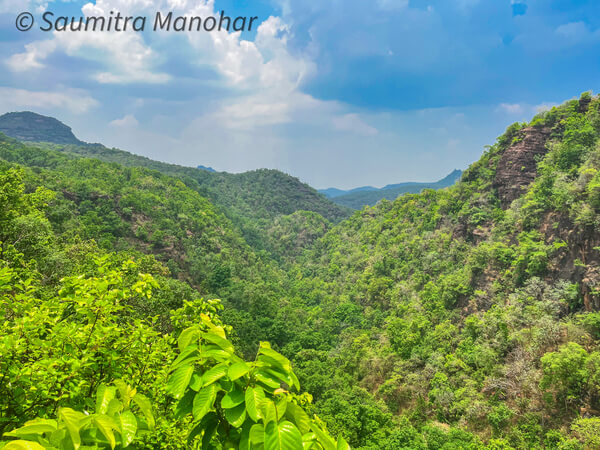
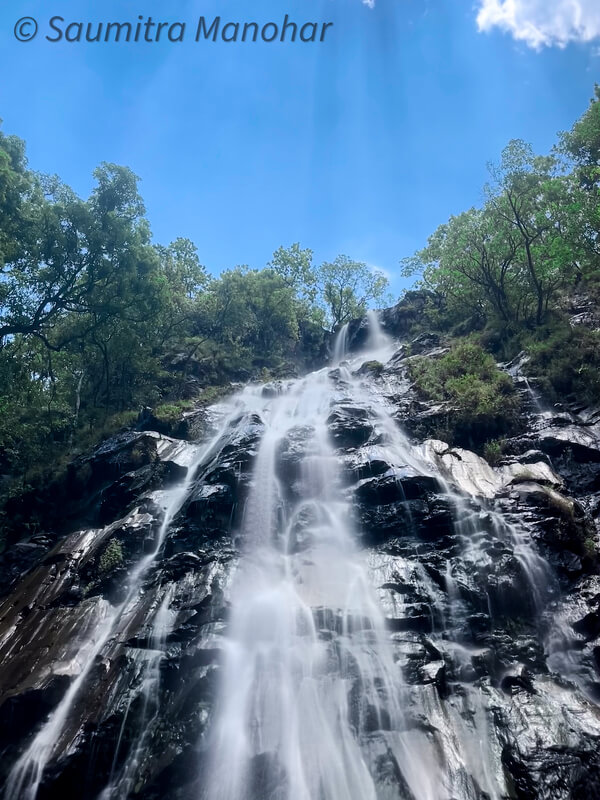
Bee Falls is easily one of the most popular attractions here. But getting there requires climbing down (and later up) around 400 steps.
It’s tiring, no doubt — but the sight of water cascading down amidst dense greenery makes it completely worth it.
Reechgarh – Raw and Mysterious
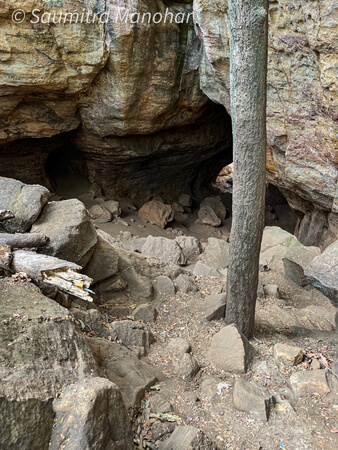
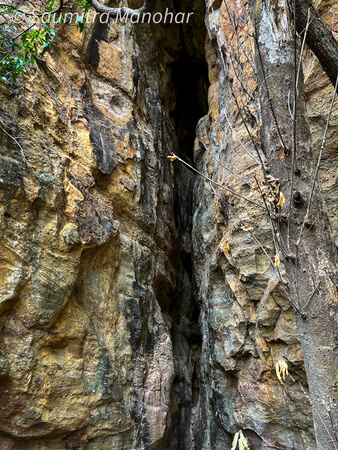
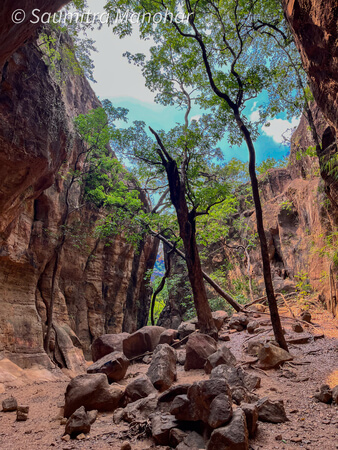
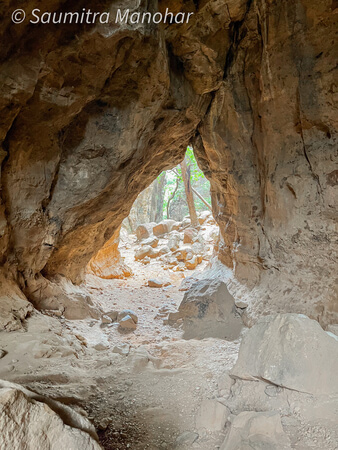
Reechgarh feels less like a tourist spot and more like a hidden natural formation waiting to be discovered. Massive rock walls, open sky above, and a narrow gorge at the end — the place has an almost cinematic feel to it.
Reechgarh is a huge cave that is believed to be inhabited by huge sloth bears (Reech in local language) in past, and hence the name. It is approximately around 3.4 kms from the Bison lodge. There is a parking where the Gypsy has to be parked and you need to do a small trek of about half a kilometer to reach the caves.
You’re also reminded here that this is still wild territory — not somewhere to linger after dark.
Dhoopgarh – The Grand Finale
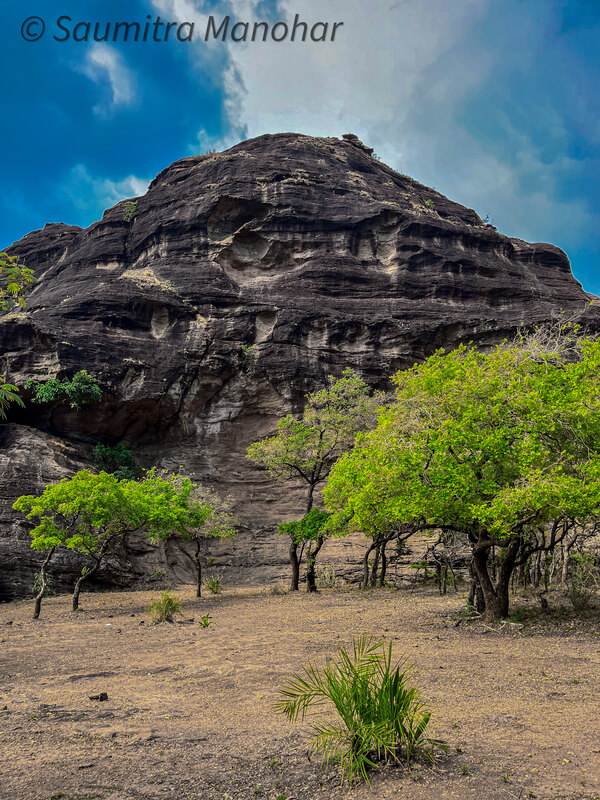
The highest point in Pachmarhi — and easily the highlight of the trip. It is said that when the sun rises in the east, the peak point on this mountain, which is a huge rock, receives the first light of the day and hence the name Dhoopgarh! (Dhoop in Hindi means Sunlight).
The drive up itself is stunning, with greenery on both sides and occasional glimpses of dramatic cliffs.
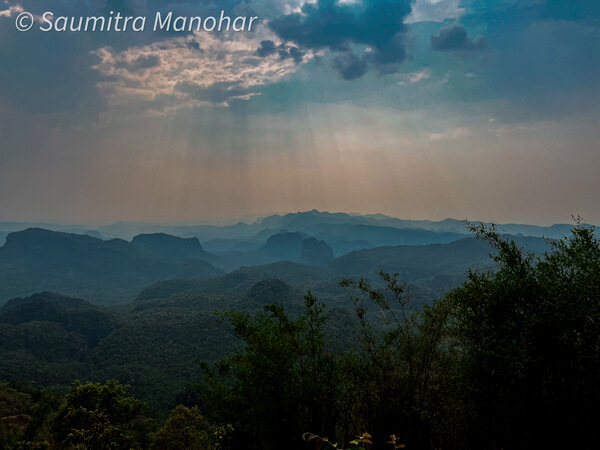
At the top, a vast and uninterrupted view of the valley unfolds before you.
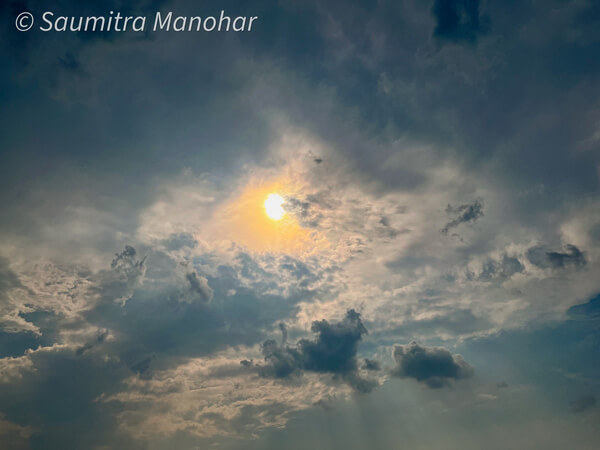
If you stay for sunset, it gets even better — but even without it, the sheer scale of the landscape leaves you speechless.
Apart from the valley views and sunset, there is a museum that showcases the bio-diversity of Pachmarhi. Very similar to Bison Lodge Museum.
Other Places to Visit in Pachmarhi (That We Couldn’t Cover This Time)
Pachmarhi has more to offer than what we managed in three days. Some spots had to be skipped simply because we preferred spending more time at the places we loved instead of rushing through a checklist. These are definitely on the list for the next visit.
Rajat Prapat (Silver Falls)
One of the highest waterfalls in Pachmarhi, Rajat Prapat appears like a thin silver stream cascading down a cliff from a distance — which is how it gets its name. Best viewed during or just after the monsoon.
Duchess Falls
For those who enjoy trekking, Duchess Falls is said to be one of the more adventurous waterfall experiences in Pachmarhi. Surrounded by dense forest, it’s ideal for travellers who enjoy nature with a bit of effort.
Apsara Vihar
A relatively easy and popular natural pool formed by cascading waters, Apsara Vihar is considered a family-friendly picnic spot. Many visitors stop here for a refreshing dip.
Panchali / Panchuli Kund
Associated with local legends linked to the Pandavas, Panchali Kund is a serene water spot tucked amidst greenery. It’s known more for its peaceful surroundings than crowds.
Astachal / Asthachal Point
A scenic sunset viewpoint that is quieter than some of the more famous points in Pachmarhi. If you enjoy calm evenings with valley views, this spot offers a rewarding halt.
Why We Skipped Them
Could we have covered all of them in one packed itinerary? Probably yes.
But Pachmarhi feels like the kind of place best experienced slowly. We chose depth over speed — longer pauses, slower walks, and time to simply absorb the atmosphere.
Which also gives us the perfect excuse to return.
Budget for Pachmarhi Trip from Mumbai
A budgetary estimate for a 3-day trip:
- Travel: ₹1500 – ₹3000
- Stay: ₹1500 – ₹6000 per night
- Local transport & permits: ₹3000+
- Food: ₹500 – ₹1000/day
Total: ₹8,000 – ₹18,000 per person
Best Time to Visit Pachmarhi
- October to March – Pleasant weather
- Monsoon – Lush and vibrant
- Summer – Still cooler than cities like Mumbai
Is Pachmarhi Worth Visiting?
Absolutely!
Pachmarhi isn’t about ticking off tourist spots. It’s about slowing down, disconnecting, and letting nature take over for a bit. Even though we couldn’t cover every single place, it didn’t feel like we missed out.
Because what stays with you isn’t just where you went — it’s how the place made you feel.
And Pachmarhi… stays with you.
FAQs
How many days are enough for Pachmarhi?
3 – 4 days are ideal.
Is Pachmarhi crowded?
No, it’s relatively quaint compared to popular hill stations.
Do you need a guide?
Yes, for forest areas (its covered in the Gypsy cost)
Final Note
If you liked this guide, you might also enjoy my detailed travel guide on Coorg from Mumbai — structured in a similar way but with a completely different vibe.
If you enjoyed this guide, check out my detailed guide on Coorg from Mumbai

